News Article
The funding squeeze starts at the margin
Published
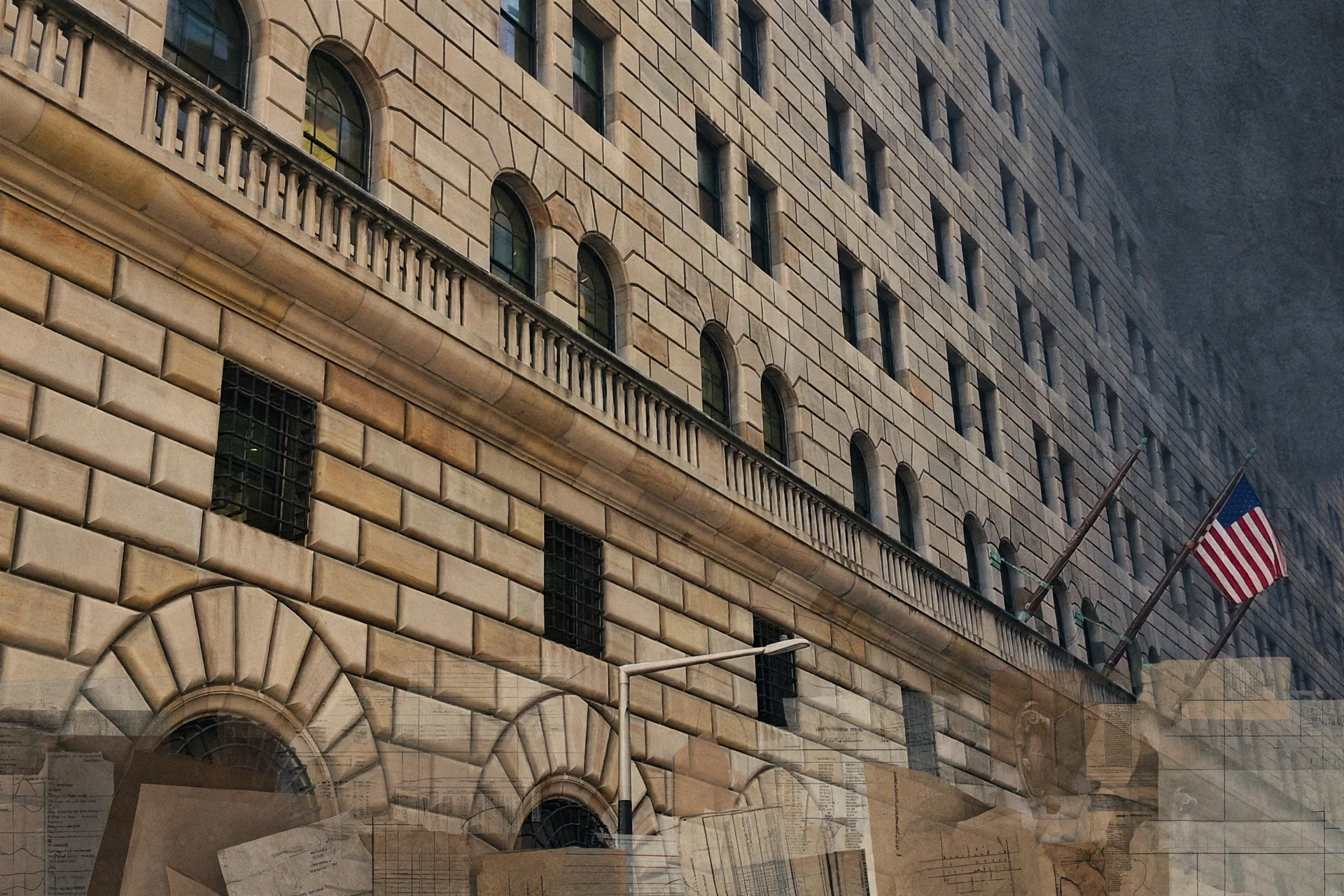
If this cycle's funding squeeze arrives on schedule, it will not begin at a money-center bank. It will begin where it always begins: with the weakest borrower, on the shortest money, at the worst moment on the calendar. All three of those conditions are visible this week, and the calendar item deserves attention first, because it is the one with a date on it.
Federal funding expires on December 11. That date sits inside the window covered by the shortest-dated credit protection this newsroom tracks, and it arrives in the middle of a market that has just fallen for seven consecutive sessions. A funding lapse is a political event, not a credit event, and this desk does not forecast congressional outcomes. What can be said mechanically is that December 11 is a hard date on which a large, price-insensitive borrower must either refinance or stop paying, and hard dates are what funding markets break on. The squeeze, if it comes, will not send a warning letter. It will use the calendar.
The borrower end of the system is already showing the strain in the prices that move first. CCC-rated spreads, the weakest tier of the traded credit market, reached 13.61% on November 19, widening 51 basis points in the four sessions from November 16. High yield overall stands at 3.52%. Investment grade sits at 0.94%. Read those three numbers as a staircase: the market is charging the weakest borrowers crisis-adjacent prices, charging the broad high-yield market for meaningful risk, and charging the strongest corporate borrowers almost nothing. Stress in this market is real and it is rationed, concentrated precisely where refinancing is hardest and cash buffers are thinnest.
The default data behind the private half of the market says the same thing in a slower voice. Fitch's private-credit default rate printed 6.20% on a trailing twelve-month basis for October, above the 5% line. Private borrowers do not have bond markets to fall back on when their lenders tighten. They have a relationship, a covenant package, and a maturity date. When the weakest traded tier widens by half a point in a week, the private borrower's next conversation with its lender gets shorter.
Against that, the price of safety moved the way it should. The ten-year Treasury yield fell to about 4.92% on November 20, a flight-to-quality bid of ten to eleven basis points in a day, as investors sold risk and bought duration. That is the banking system's shock absorber working: deposits and collateral values benefit when the risk-free curve rallies. It is also a reminder that the squeeze at the margin and stability at the core can coexist for a long time. They usually do, right up until they don't.
The uncomfortable variable is the policy path. The minutes of the October Federal Open Market Committee meeting read hawkish, the hold was a close call, and the market now prices a December rate hike at roughly 95%. A central bank moving toward tightening while the weakest tier of credit widens is the classic late-cycle configuration error, and it is worth stating plainly: every prior funding squeeze in the modern era has had a policy mistake or a calendar accident somewhere near its root, and this December offers a candidate for each.
None of this is a claim that a squeeze is underway. The evidence for that would be specific and visible: a failed or tailed Treasury auction into the December 11 date, overnight funding rates printing above their administered range, or an investment-grade name losing market access. None has occurred. What has occurred is the assembly of preconditions at the margin, weakest borrowers paying up, private defaults above threshold, shortest funding facing a hard political date, policy priced to tighten into it.
The desk's monitoring list for the next three weeks is therefore short and dated. December 11 itself. The CCC spread, where a move through 15% would say the rationing is becoming exclusion. And the December Fed decision, where a hike delivered into this tape would convert a priced expectation into an actual tightening of the screw. The margin is where squeezes start. The margin is where we are watching.
Documents & methods
- ICE BofA CCC, U.S. high-yield and U.S. corporate investment-grade option-adjusted spreads (via FRED, Nov. 19, 2026)
- Private-credit default rate, trailing twelve months, Fitch Ratings (October 2026)
- Minutes of the October 2026 meeting of the Federal Open Market Committee
- Federal funding expiry, Dec. 11, 2026 (continuing appropriations deadline)
The spreads are the published index values for November 19 and the default rate is Fitch’s published print. The story states the evidence that would confirm a funding squeeze, a failed or tailed Treasury auction, funding rates above their administered range, or an investment-grade name losing market access, and records that none of it has occurred.
The instruments behind this reporting: the seven gauges.
Reporting by The Fault Lines is assisted by AI tools and audited and edited by the editor.
Contact the editors on this story — [email protected]. Michael Davis, Editor, The Fault Lines.