News Article
The AI financing trade loses altitude
Published
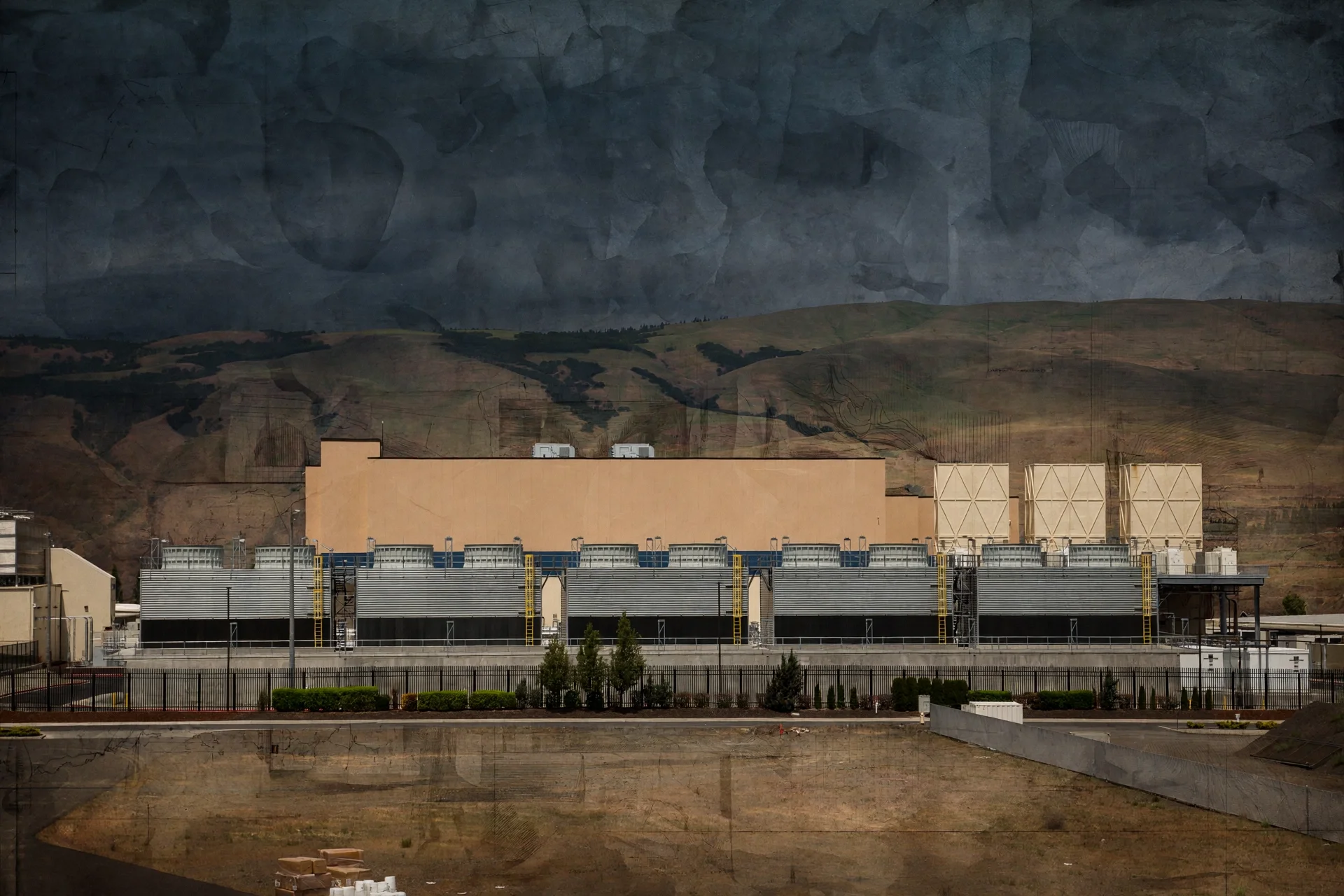
The trade that financed the artificial intelligence buildout spent the week of November 16 unwinding in public. On Friday, November 20, Applied Digital fell 18.03% in a single session, completing a five-session decline of 20.16%. IREN fell 26.33% over five sessions. CoreWeave and Nebius both crossed minus 20% over the same window. These are the neoclouds, the leveraged intermediaries that borrow against graphics processors and rent the capacity onward, and they are the most financed names in the most financed trade in the market.
The hub of the complex fell with them. Nvidia dropped 11.79% on November 20 and now sits 41% below its October peak. It did so after beating its third-quarter numbers and guiding up. When the supplier at the center of a financing structure falls by two-fifths from its high on good results, the market is not repricing earnings. It is repricing the structure.
The newest paper in the complex repriced fastest of all. Anthropic's initial public offering, priced November 19 at $83 a share and raising $81 billion, slid roughly 12 to 13% within days of its debut. A record offering that cannot hold its issue price is a data point about the marginal buyer: the demand that was supposed to absorb unlimited AI supply at any price has a limit, and it found it this week.
The broad market confirmed the mood. The S&P 500 fell for a seventh straight session on Friday and stands about 10% below its record. But the desk's job is to say precisely what did and did not happen inside the AI complex, because the distinction decides what this episode is. What did not happen matters as much as what did. There was no single-name credit event. No default, no missed payment, no auditor resignation, no contract cancellation, and no hyperscaler cut its capital spending guidance. The daily news scan across the watchlist came back clean on every one of those triggers, all week. This was a sector-wide liquidation of crowded, leveraged equity exposure, not the first break in the financing chain.
That distinction has a shelf life, and the issuance data says why. For four years, from 2022 through 2025, the large companies at the center of this trade were retiring shares. Our implied net issuance series, built from the Federal Reserve's Financial Accounts, now prints net equity issuance of positive 5.05% a year as of the second quarter of 2026, the 79th percentile of a sample running back to 1952. The buyback bid that absorbed supply and flattered per-share earnings is gone, and issuance has replaced it. Acadian Asset Management, measuring directly rather than by inference, puts net new issuance at 3.1% of total market capitalization and dates the end of the repurchase era to the switch from buying in 2024 to issuing today.
The arithmetic of that flip is unforgiving. At 5% annual net issuance, aggregate corporate earnings must grow 5% a year simply for earnings per share to stand still. Issuance at peak multiples is rational for the issuer; it is the cheapest capital a company will ever be offered. For the holder, it means the per-share claim is being diluted at exactly the moment the financing structure built on top of those shares is at its most extended.
History is not neutral on this pattern. In our series, the four quarters before past recession peaks carried average net issuance of roughly three and a half percent a year, about five times the sample mean, and forward three-year real returns after top-quartile issuance quarters averaged about half the return after net-buyback quarters. Issuance does not time tops. It clusters at them, because peaks are when issuing is easiest.
So the desk's read is two-part. The liquidation itself is a positioning event, violent but so far clean of credit damage. The regime underneath it has changed: the marginal flow in this market is now supply, not buyback demand, and the buildout is being financed by selling new claims into a falling tape. Financing structures survive liquidations. They struggle when they must keep issuing into one.
What to watch next is specific: any hyperscaler capex guide-down, any neocloud payment failure or refinancing on punitive terms, and whether the issuance pace holds above 4% when the fourth-quarter Financial Accounts print. Until one of the credit triggers fires, this remains a story about altitude, not about the ground.
Documents & methods
- Newsroom AI-chain watch session records, Nov. 16-20, 2026 (Applied Digital, IREN, CoreWeave, Nebius, Nvidia)
- Newsroom net-issuance series, built from the Federal Reserve’s Financial Accounts of the United States (Q2 2026)
- Investor letter on net issuance, Acadian Asset Management (reported by CNBC, Nov. 20, 2026)
- Anthropic initial public offering pricing, Nov. 19, 2026 (as reported by CNBC)
The desk’s daily news scan of the complex ran clean all week: no default, missed payment, auditor resignation, contract cancellation or capex guide-down at any covered name. The story’s distinction between a liquidation and a credit break rests on that scan. The issuance history and forward-return pattern are the desk’s analysis of its own series, labeled as such in the text.
The instruments behind this reporting: the seven gauges.
Reporting by The Fault Lines is assisted by AI tools and audited and edited by the editor.
Contact the editors on this story — [email protected]. Michael Davis, Editor, The Fault Lines.