News Article
Small-business filings rise for an eighth week
Published
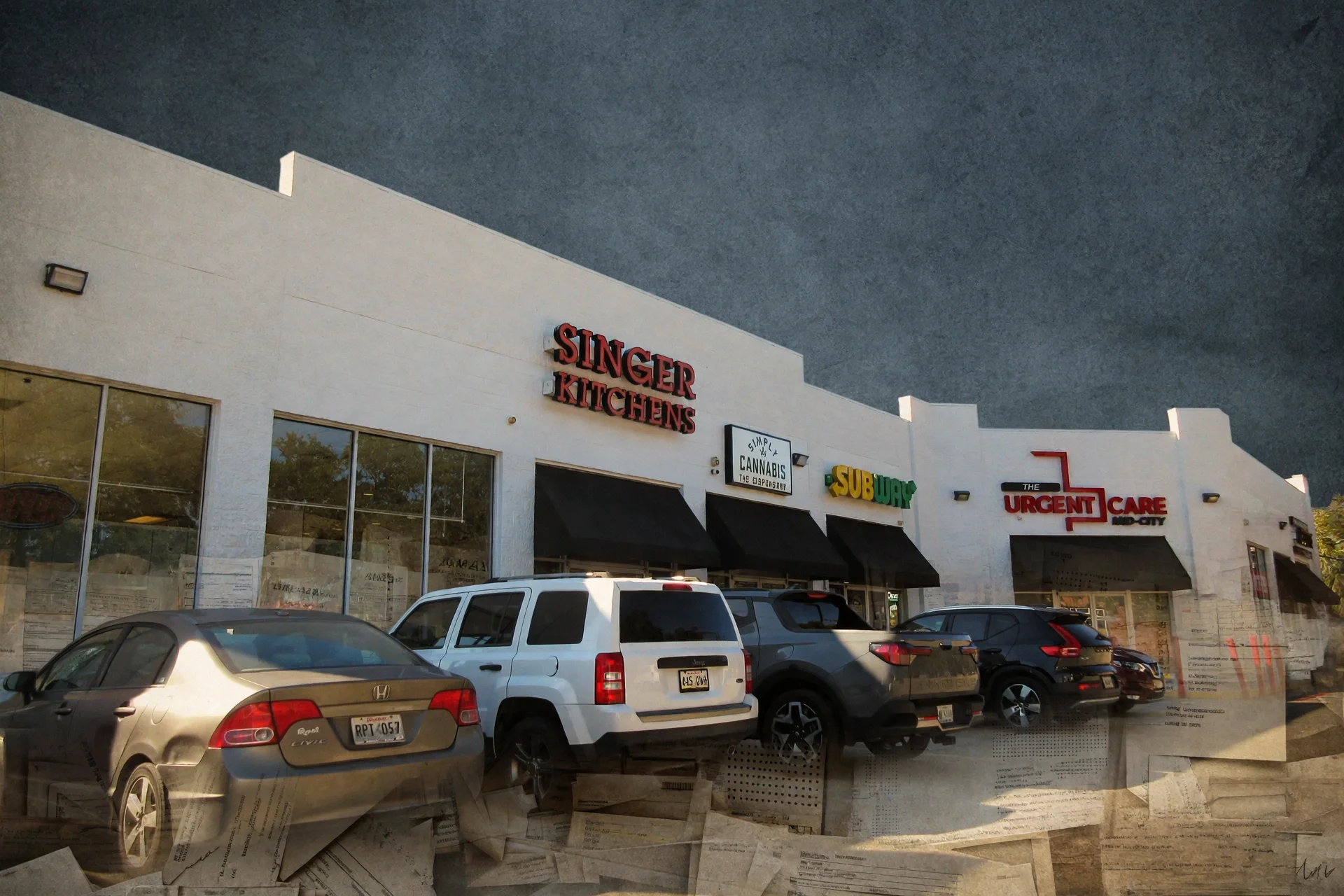
Thirty small businesses filed for bankruptcy in the seven days from November 13 to November 19. That is the count from this newsroom's corporate distress watch, which reads the Chapter 11 dockets daily and logs every small filing it finds. The rolling seven-day total has now crossed the watch's aggregation threshold for eight consecutive weeks. The streak is the story: any single week can be noise, but two months of it is a trend with a slope.
The filings are not household names, and that is precisely their value as evidence. They are the economy's capillary bed. In the latest week the dockets carried, among others, a Kinston, North Carolina restaurant and supermarket operator that filed on November 17 with assets listed at under $100,000, a Baton Rouge roofing contractor, a Henderson, Nevada utility-construction firm, and a Beverly Hills real-estate lessor. A Greek Orthodox residential institution in Garrison, New York filed on November 13. A Minnesota lighting agency that had operated for 56 years filed on November 19, carrying roughly $10.4 million in top unsecured claims. None of these will move an index. Together they describe credit conditions at the level where businesses borrow from community banks, trade creditors, and their own landlords, and where there is no capital market to refinance into when the money gets tight.
The week's dockets also carried the two ends of the small-business economy at once. On November 18, Wynn Global Logistics, a freight forwarder serving Amazon, eBay, and Wayfair sellers, filed in New Jersey with liabilities reported around $1.8 million — a business that existed because e-commerce volume did, undone when the volume or its margins thinned. On November 13, creditors filed an involuntary Chapter 11 petition against Hamilton Reserve Bank, a depository institution, in the Southern District of New York. Involuntary petitions are rare enough to note: four creditors decided, jointly, that the court offered them better odds than the borrower's promises did.
The layoff side of the ledger fired in the same week, for the fifth consecutive time. Thirteen announcements in the November 13-19 window totaled roughly 7,324 to 7,724 jobs. The largest single new name was Lufthansa, cutting 1,000 jobs at its Frankfurt and Munich hubs after its core airline lost money for a third straight year. The announcements earlier in the streak were heavier: Imperial Brands phasing up to 4,600 cuts by 2030, David Jones at roughly 1,500 jobs, BAE Systems at 1,070. The pattern across five weeks is not one industry's bad quarter. It is a broad, shallow rise in the rate at which employers decide they need fewer people.
Two honest cautions belong in this story, and the desk will not publish it without them. First, the aggregation thresholds are deliberately sensitive: the bankruptcy trigger fires at five filings in a rolling week, and the layoff trigger at a level a single mid-size announcement can reach. A sensitive gauge fires often, including in expansions, and eight consecutive fires is partly a statement about where the threshold was set. Second, these are counts, not rates. We do not yet normalize the filing count against the stock of small businesses, so the series can drift upward with the population it measures. Both cautions are real. Neither dissolves the signal. A streak this long, rising from 23 filings in the count two weeks ago to 28 last week to 30 now, with the layoff announcements holding above threshold alongside it, is not what the data looked like when conditions were easy.
The reason this desk leads with small filings rather than waiting for the official series is timing. The Federal Reserve's delinquency data and the New York Fed's household debt report are quarterly and arrive months late. The dockets are daily. By the time small-business stress is visible in the official stock measures, it has been visible in the filing flow for a quarter or more. The flow is where a turn shows first, in both directions.
What would stand this story down is as concrete as what built it: two consecutive weeks below the bankruptcy threshold, and a layoff week that does not fire. What would escalate it is a change in the character of the filings, from Subchapter V small-business cases toward mid-size operating companies with real payrolls, or a week in which the layoff count stops being shallow and broad and starts being deep. We read the dockets every morning. The streak gets reported either way it breaks.
Documents & methods
- Chapter 11 dockets, U.S. bankruptcy courts via PACER (Nov. 13-19, 2026), including King’s Restaurant and Supermarket (E.D.N.C., Nov. 17), R.L. Mlazgar Associates (D. Minn., Nov. 19), Wynn Global Logistics (D.N.J., Nov. 18) and the involuntary petition against Hamilton Reserve Bank (S.D.N.Y., Nov. 13)
- Layoff announcements compiled by the newsroom’s corporate distress watch (Nov. 13-19, 2026), including the Lufthansa Group announcement (Nov. 20, 2026)
The desk reads the Chapter 11 dockets daily and logs every small filing it finds. The counts are filings, not rates: the series is not normalized against the stock of small businesses, and the aggregation thresholds are deliberately sensitive. Both limits are stated in the story.
The instruments behind this reporting: the seven gauges.
Reporting by The Fault Lines is assisted by AI tools and audited and edited by the editor.
Contact the editors on this story — [email protected]. Michael Davis, Editor, The Fault Lines.